Resuscitation of Bill Stackhouse
East of the MountainsThe resuscitation of Bill Stackhouse is a battlefield medical emergency in which Ben Givens moves from witness to active participant, helping a surgeon restore Stackhouse’s heartbeat and then donating blood. In a crowded aid station improvised inside an Italian farmhouse, the work proceeds through uncertainty, failed signs of life, and a desperate operation. Its significance extends beyond the immediate rescue: decades later, Ben remembers both the intervention and the friend who survived it, while the scene stands against his later wish to avoid the suffering of his own terminal illness.
Causes and Setting
Stackhouse is brought into the battalion aid station at Carge, where wounded soldiers already crowd the walls and floor. The medical team has little room and no conventional operating theatre; crates and bins beneath a gas lamp become an operating table. Stackhouse is unresponsive, his clothes and blankets saturated with blood, and the medic reports that he is deteriorating. The setting places the rescue among the ordinary pressures of wartime care: other casualties are arriving, staff are occupied, and each decision competes with the needs of patients nearby.
The battalion surgeon begins treatment while attending to another wounded soldier. When Stackhouse’s veins collapse and the first attempt to establish an IV fails, the surgeon opens a vein in one arm and secures access for fluids. He repeats the procedure on the other arm when Stackhouse’s pulse can no longer be found. Ben stays beside him, keeping a hand against Stackhouse’s hip as the team works. The changing signs—from a pulse thought to be present, to none the sergeant can detect—make the danger explicit without giving the rescuers certainty about what can still be done.
The Resuscitation
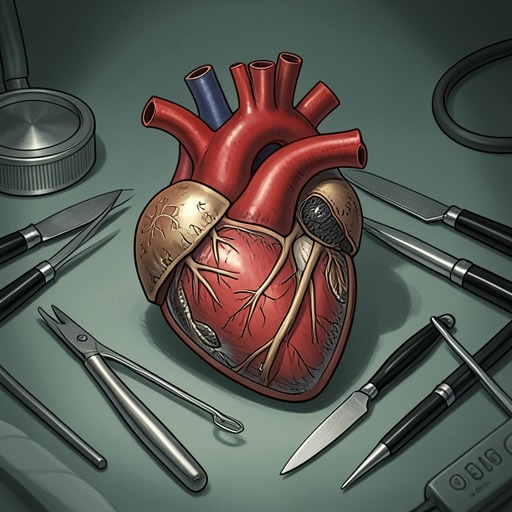
With Stackhouse unresponsive, the surgeon decides to open his chest and asks Ben and the medic to help hold the retractors. Ben feels a tremor at the prospect, but follows the instructions. The surgeon reaches into Stackhouse’s chest and works there while the team continues ventilation and plasma transfusion. Ben steadies the opening and adjusts his effort when the surgeon asks him to pull harder. The moment makes medical care a collective task: the surgeon’s expertise depends on the other men sustaining their separate roles under pressure.
The intervention produces a reversal. Stackhouse’s heart begins beating again, at first irregularly and then in a faster, steadier rhythm. The surgeon checks for a pulse and continues treatment rather than treating the renewed heartbeat as the end of the emergency. He orders additional care and directs Ben to help with the next steps. When Ben takes over sealing the incision, he feels it move with the sergeant’s breaths through the ventilation tube. The heartbeat is a crucial change, but Stackhouse still needs blood: the surgeon warns that he is not clotting and needs a transfusion quickly.
Ben’s Part in the Rescue
Ben offers his own blood, explaining that he is Stackhouse’s friend and confirming that he is O-positive. The surgeon plans to draw a pint after closing the incision; Ben urges him to take more. In the end, the team draws two pints. Ben sits dazed as the technician transfers his blood to Stackhouse, an act that carries the rescue from surgical intervention into direct personal commitment. Ben does not merely assist because he has medical experience; he makes his own body part of the effort to keep his friend alive.
Afterward, Ben is emotionally overwhelmed. He cradles his head in his hands and remains there until he is placed in the care of the battalion chaplain, who offers consolation but is also at a loss. Ben spends three days in the rear, wrapped in blankets on a cot, and is interviewed twice by the division psychiatrist to assess whether he is fit for service. He is eventually returned to the line with replacement recruits. He keeps apart from them, unwilling to form attachments to men he expects may soon be lost. The rescue saves Stackhouse, but it does not spare Ben the strain of the scene or the wider burden of wartime loss.
Outcome and Later Meaning
The later account confirms that Stackhouse survives. He lives with a limp and shoulder pain that worsens in cold weather, retires from a sales job at an office-supply company in Bethlehem, Pennsylvania, and has eleven grandchildren. He and Ben meet three times at 10th Mountain Division reunions and speak at length about what happened. Stackhouse slowly writes his memoirs so that his descendants will know the story as well. The aftermath gives the rescue a human timescale far beyond the crisis in the farmhouse: the wounded soldier who seemed to be slipping away becomes a grandfather intent on passing his history on.
More than fifty years after the event, Ben thinks of Stackhouse’s heart while lying in a motel room in Quincy, Washington. By then, Ben is himself confronting incurable cancer and the suffering he believes lies ahead. His professional history had taught him to treat the heart as a physical muscle, yet the memory of Stackhouse brings that knowledge into contact with friendship, survival, and the continuing life of another person. Nineteen months after his last surgery, Ben will again find himself assisting a veterinarian with an operation on Rex during the journey on which he had intended to die. The parallel does not make the battlefield rescue and the later episode identical; it shows how medical work repeatedly draws Ben back into care when he expected to be beyond it. Stackhouse’s restored heartbeat remains a concrete answer to the despairing idea that nothing can be done, even as Ben’s own diagnosis makes clear that medical skill cannot defeat every death.